Caught in the Act: The ATM Skimming Case That Exposed a Criminal
We trace how Mark T., a 34-year-old Tampa Bay resident, turned a $480 cryptocurrency purchase into $4,900 in withdrawals, an arrest after 15 days and a five-year federal sentence. The case shows how ATM video, transaction logs, physical evidence and KYC records removed his assumed darknet anonymity.
In November 2024, Mark bought six cloned debit cards with PINs from an unnamed darknet marketplace. He paid $480 in cryptocurrency for cards encoded with magnetic-track data stolen from genuine accounts; the first three ATMs paid out $4,200, but the fourth transaction became his last successful withdrawal.
This is not guidance on buying or using cards. We are examining how investigators identified a previously unknown offender within the initial 72-hour investigative period and then built a case that reached the US Secret Service and ended in federal prison.
How did the carding chain operate?
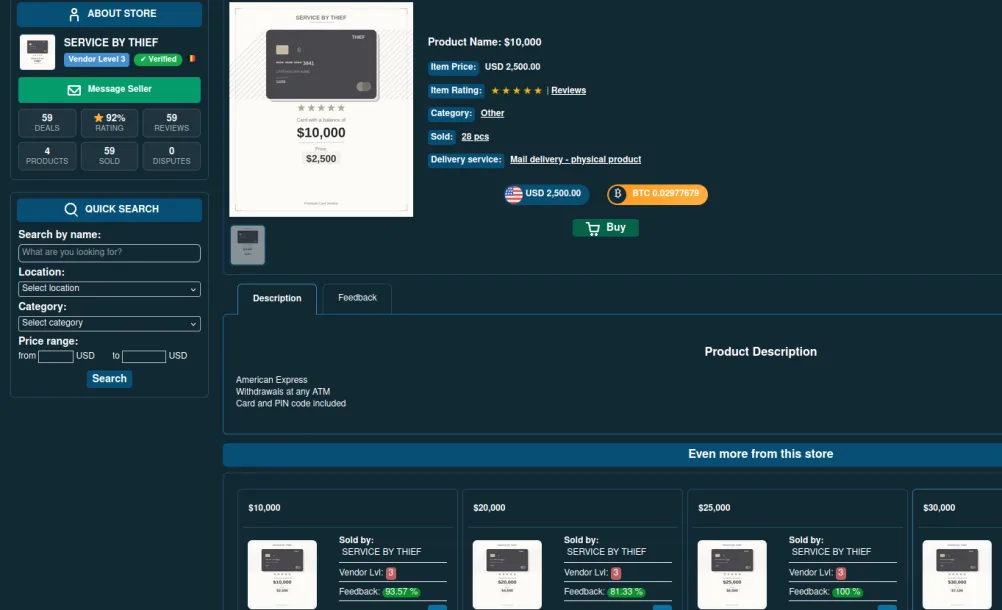
Carding is the sale and use of stolen banking information, and the method used by Mark followed a long-established sequence. References to carding forums dark web, cloned cards reddit, cf card cloning or card skimming reddit may use inconsistent terminology, but this case concerned cloned payment cards carrying stolen magnetic tracks.
- Data collection: Criminals obtained track 1 or track 2 data through ATM skimmers, shimmer devices, phishing, data breaches or dumps purchased on darknet markets.
- Card production: The stolen tracks were written to blank plastic, which was made to resemble a genuine card with a name, expiry date and card number.
- PIN acquisition: When an overlay keypad or concealed ATM camera captured the PIN, the resulting card could be used for cash withdrawals.
- Cash-out: The buyer withdrew money before the account holder noticed the fraud and blocked the card.
- Laundering: Cash could then be converted into cryptocurrency through a Bitcoin ATM or peer-to-peer exchange.
Mark selected Monero because tracing it is difficult. The six cards arrived by post in neutral packaging, making the transaction appear successful, but the scheme did not account for the amount of evidence collected by an ATM.
Why did the fourth ATM identify Mark?
Modern ATMs record more than withdrawals. Almost every machine contains a built-in facial camera, commonly recording at 1080p with infrared night illumination; many models also have a second camera positioned at another angle and concealed from the user.
The transaction log records the card number, amount, status, ATM identifier and time to the second. Geolocation data gives the machine’s coordinates, while network logs preserve requests to the bank processor and associated connection metadata.
At the fourth ATM in a Tampa Bay suburb, Mark wore no mask, glasses or hat. The camera captured his face in full profile while he withdrew $700, collected the card and left, producing 23 seconds of usable footage.
The practical finding is direct: darknet anonymity did not continue at the physical withdrawal point. This is relevant if someone searches how to tell if a card reader has a skimmer, atm skimmer images or how to tell if there is a card skimmer; it does not mean this source tested any particular reader or detection method.
How did the investigation progress?
| Time | Investigative development |
|---|---|
| Day 1 — November 2024 | Three victims in Florida, Georgia and North Carolina reported unauthorised withdrawals to their banks. The cards were blocked, and the information entered the early fraud warning system. |
| Day 3 | Automated anti-fraud algorithms identified rapid withdrawals involving the same group of cloned cards across different states. An emergency flag was generated, and the bank’s investigation department received the case. |
| Day 5 | The bank referred the matter to the US Secret Service, which has jurisdiction over financial crime. An analyst requested transaction logs and recordings from every relevant ATM. |
| Day 8 | Footage from the fourth ATM supplied a clear face. A comparison with the Florida Department of Public Safety driving-licence database matched Mark T., who had no previous convictions; transaction analysis also placed every withdrawal within 40 miles of his home. |
| Day 12 | An investigator obtained authority to examine browser history, ISP records and cryptocurrency-wallet activity. ISP data showed visits to Tor exit nodes during the relevant purchase hours, while a court order to the exchange where Mark acquired Monero connected his wallet to a marketplace account. |
| Day 14 | A residential search warrant was issued. Officers seized six blank plastic cards, a magnetic-stripe reader/writer, a laptop showing darknet-market visits and Tor Browser traces, $3,200 in cash and the shipment packaging. |
| Day 15 | Mark was arrested and admitted purchasing the cards and cashing out four of the six. The remaining two failed because the bank had already blocked them. |
What were the financial and sentencing figures?
| Measure | Result |
|---|---|
| Successful withdrawals | 4 |
| Total withdrawn | $4,900 |
| Price paid for the cards | $480 |
| Time from withdrawal to arrest | 15 days |
| Federal prison sentence | 5 years, or 60 months |
| Fine and restitution | $22,000 |
| Supervised release | 3 years |
The first three machines supplied a combined $4,200, and the fourth supplied another $700. Of the cash obtained, $3,200 remained in Mark’s apartment when it was searched.
Why did Monero fail to protect his identity?
Monero made subsequent transfers difficult to follow, but Mark acquired it through a centralised exchange requiring KYC checks. He had uploaded his passport and a selfie, and the exchange disclosed his identity and transaction history under a court order; the purchase date and amount consequently became evidence.
Timing added further support because the Monero acquisition, marketplace order, postal delivery and ATM withdrawals all occurred within two weeks. This was circumstantial evidence, whereas the seized cards provided direct physical evidence because their magnetic tracks matched dumps taken from the victims’ accounts.
Video placed Mark at the withdrawal point independently of the cryptocurrency trail. Even if his other precautions had worked, the clear facial recording still connected him to the transaction.
Which decisions strengthened the case against him?
- Restricted geography: All four ATMs were located within 40 miles of Mark’s home, creating a pattern that fraud systems could flag.
- Visible face: He used no hat, glasses or mask, allowing comparison with the DPS database.
- KYC exchange: Buying Monero through a centralised service connected his verified identity to the later marketplace payment.
- Evidence at home: Cards, the magnetic-stripe device and browsing records remained in the apartment. Deletion would not necessarily have removed Tor Browser traces, while operating-system update history could indicate use.
- Retained cash: The seized $3,200 matched the denominations dispensed by the ATM and reinforced the charge.
- Concentrated activity: Every withdrawal occurred within two weeks. Spreading them across months might have delayed the automated alert, but it would not have removed the ATM recordings.
What should security teams and customers take from the case?
Banks’ automated fraud controls acted before a human investigator became involved. Pattern analysis, geographical rules and scoring models detected the activity, supporting continued investment in machine-learning anomaly detection.
Physical and digital evidence worked together: transaction logs identified the exact second that investigators needed to examine, and the corresponding video supplied the face. KYC records also showed why a privacy-focused cryptocurrency does not guarantee anonymity when a verified exchange connects a person to the point of purchase and cash connects that activity to the physical world.
Customer reporting remained slower than the withdrawals. Faster notification lets a bank block a card sooner and reduce losses, so banks should organise direct customer education around rapid reporting.
Queries such as credit card skimming device detector, credit card skimmer protection, credit card skimmer protector, credit card skimming protection, card skimming protection and card skimming protector describe preventive concerns. This account is relevant if readers ask how to check for credit card skimmers; it does not evaluate any detector or commercial protection product.
What verdict did the federal court deliver?
In March 2025, Mark pleaded guilty to fraud and related activity involving access devices under 18 U.S.C. § 1029, plus money laundering under 18 U.S.C. § 1957. The US District Court for the Middle District of Florida imposed 60 months in federal prison, three years of supervised release, and $22,000 in fine and restitution to the three victims.
The judge recognised that Mark was not the organiser but the buyer at the end of the operation. That position carried the physical exposure and punishment, while organisers operating higher in the chain more often remain unidentified and take law enforcement longer to pursue.
What ultimately ended Mark’s anonymity?
We see a direct sequence: automated bank alerts isolated the pattern, ATM logs identified the relevant recording, a driving-licence database named the suspect, and KYC and residential evidence supported the prosecution. Monero did not remove the verified exchange records, and Tor activity did not remove the physical evidence.
In this account, the website where the purchase was made is deliberately unnamed. That wording — the website where the purchase was made — is the only appropriate reference because the source supplies no URL or onion address.
Questions readers ask
How quickly was Mark arrested?
He was arrested 15 days after the withdrawals began. The investigation had already identified decisive patterns and evidence during the earlier stages.
How much money did the cloned cards produce?
Four withdrawals produced $4,900: $4,200 from the first three ATMs and $700 from the fourth. The other two cards had been blocked before Mark could use them.
Did Monero make the marketplace payment anonymous?
No. The later Monero movement was difficult to trace, but Mark bought it through a KYC exchange that held his passport, selfie and transaction records.
Does this case recommend a skimmer detector?
No. Although readers may search for a credit card skimming device detector or ask how to check for credit card skimmers, the source evaluates no device and gives no product recommendation.
 Link of Dark WebDiscover verified links to the dark web, ensuring safe access to hidden resources and communities with our curated guide.
 URL for Dark WebDiscover legitimate URLs for the dark web, learn how to access them safely, and understand their purpose without any prior knowledge requir…
 Dark Web ShopsExplore the best dark web shops for secure shopping. Discover reliable marketplaces and tips for safe transactions in the dark web.