Darknet Address
This guide is for privacy-conscious users seeking to understand darknet addresses and access onion services securely.
Recommended Services with Onion Links
This selection highlights essential services accessible via Tor, enhancing your experience on the network. Each entry provides secure and reliable options for various needs.
Nexus Market
Nexus Market — A reliable platform for digital goods with secure transaction methods.
ums7mctigzemj3thj7nihnbpdb4evkvwvdfd3obodu2iv2q3s522aiyd.onion
Proton Mail
Proton Mail — Proton Mail provides encrypted email services with a focus on user security.
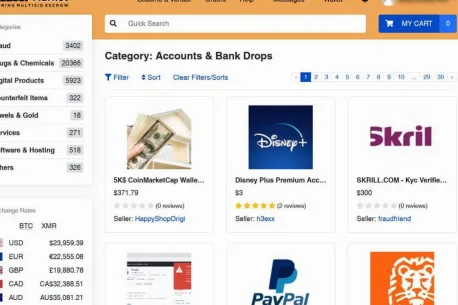
Tor2Door Market
Tor2Door Market prioritises user privacy with a simple interface and accepts both Bitcoin and Monero for anonymous transactions.
ytjm2aoy6o65si4xs3ltqs5jbkzyefvzlyzi4u3srqlljlcdhd6bojqd.onion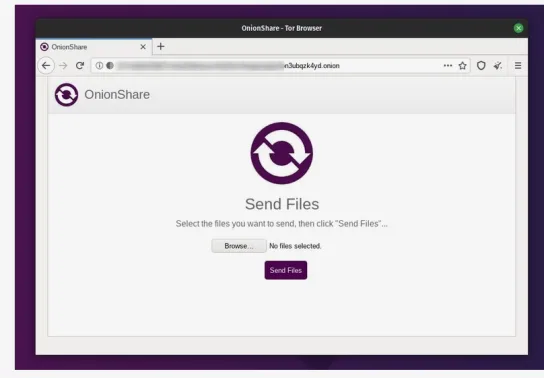
OnionShare
OnionShare is a tool for sharing files securely and anonymously without third-party hosting or account requirements.

Professor Mariarti
Professor Mariarti is a private channel providing insights into the darknet, including safety tips and money-making strategies.
LONELY ROAD
LONELY ROAD is a marketplace featuring multilingual support and a variety of products, from cloned cards to software.

A darknet address identifies a service on an intentionally hidden network; on Tor, it is a hostname ending in the special-use ".onion" domain and accessible only through Tor.[1][2][3] Current v3 onion addresses have a 56-character label, while obsolete v2 addresses used 16 characters, so we advise replacing old v2 bookmarks.[4][5]
Darknet Address Source Confidence Matrix
- Source Type
- Official Websites
- Impersonation Risk
- Low
- Verification Strength
- High
- Notes
- Check for HTTPS and Onion-Location header.
- Source Type
- Signed Announcements
- Impersonation Risk
- Medium
- Verification Strength
- Medium
- Notes
- Verify against official sources.
- Source Type
- Onion-Location Headers
- Impersonation Risk
- Medium
- Verification Strength
- Medium
- Notes
- Must be from HTTPS pages.
- Source Type
- Search Results
- Impersonation Risk
- High
- Verification Strength
- Low
- Notes
- Use caution; verify with multiple sources.
- Source Type
- Social Posts
- Impersonation Risk
- High
- Verification Strength
- Low
- Notes
- Often unreliable; cross-check information.
- Source Type
- Anonymous Directories
- Impersonation Risk
- Medium
- Verification Strength
- Variable
- Notes
- Depends on directory's reputation.
What Is a Darknet Address?
A darknet address is an informal term that refers to a digital location within anonymous networks, often associated with the dark web. While "darknet address" can encompass various technologies, it is frequently used to describe specific types of addresses, such as "onion addresses," "onion services," and ".onion URLs." These terms have distinct meanings; for instance, an onion address is a hostname that ends with the ".onion" domain and identifies a service accessible solely through the Tor network[1].
Not every darknet operates on the Tor network. The term "darknet" is broader and includes other anonymous networks like I2P and Freenet[6]. However, when discussing .onion addresses, we specifically refer to those that are part of the Tor ecosystem. A current v3 onion address consists of a 56-character label followed by ".onion," which is the standard format for these addresses[4]. For example, a fictional and non-resolving onion address could be "abcde1234567890fghijklmnopqrstuvwxzyz.onion."
It's important to note that the .onion domain is designated as a special-use domain by RFC 7686, meaning that applications not implementing Tor should return an error when attempting to resolve these addresses[2]. Consequently, users should be cautious when exploring the darknet, ensuring that they are using the appropriate software, such as the Tor Browser, to access these unique services safely.
Darknet, Dark Web, Deep Web, and Surface Web: Key Differences
Understanding the distinctions between the darknet, dark web, deep web, and surface web is essential for navigating online spaces safely. We present a comparison table to clarify these differences regarding definition, accessibility, indexing, and typical legitimate uses.
| Feature | Surface Web | Deep Web | Dark Web | Darknet |
|---|---|---|---|---|
| Definition | Publicly accessible content indexed by search engines | Unindexed content, including databases and private accounts | Intentionally hidden content requiring special software | Anonymous networks within the deep web, including Tor |
| Accessibility | Accessible via standard web browsers | Accessed via specific URLs, often with credentials | Requires software like Tor for access | Examples include Tor, I2P, and Freenet[6] |
| Indexing | Indexed by search engines | Not indexed, hidden from search engines | Not indexed, requires specific knowledge to access | Not indexed; users must know how to access them |
| Typical Legitimate Uses | Websites, blogs, and social media | Email inboxes, account dashboards, and databases | Secure communication, whistleblowing, and countering censorship[7] | Privacy-focused services and anonymous communication |
The deep web encompasses ordinary private content, such as email inboxes and account dashboards, which are not indexed by search engines. In contrast, the dark web is a subset of the deep web that is intentionally hidden and requires special software, like the Tor Browser, for access. This distinction is crucial; while both areas are not accessible through conventional means, the dark web often hosts services that prioritise anonymity and privacy, such as secure communication platforms and whistleblowing sites.
Navigating these spaces requires an understanding of their structure and purpose. Users should be cautious and informed about their actions, especially when venturing into the dark web or darknet.
How Onion Addresses Work
Onion addresses operate through a method known as onion routing, which ensures anonymity by encrypting data multiple times and routing it through a series of relays. This process involves the Tor network, which is designed to protect user privacy by obscuring their IP addresses. An onion service is accessed via a specific hostname ending in the ".onion" domain, which can only be reached through the Tor Browser[1].
Current v3 onion addresses consist of a 56-character label that employs Base32 encoding. This label encodes a 32-byte Ed25519 public key, a two-byte SHA3-256-derived checksum, and a one-byte version field, with the default version set to 3[4][8]. In contrast, the obsolete v2 addresses used a much shorter 16-character label and are no longer functional since the Tor Browser's upgrade in 2021[5].
The .onion domain is classified as a special-use domain according to RFC 7686, meaning that non-Tor applications should return an error when attempting to resolve these addresses instead of using conventional DNS systems[2]. This distinction is crucial; it highlights that .onion addresses are specifically designed for anonymity and security within the Tor network, unlike typical web domains.
When a user connects to an onion service, the connection typically utilises six Tor relays—three chosen by the client and three by the service—creating a secure rendezvous point for communication[9]. The integrity of the connection is ensured by verifying a signed service descriptor against the public key encoded in the onion address, confirming that the connection corresponds to the intended service rather than merely validating the operator's identity[9].
Understanding these components is essential for safely navigating and using onion services, as they are designed to prioritise privacy and security within the dark web environment.
Where Legitimate Onion Links Are Published
To ensure safe access to onion services, we recommend prioritising verified surface-web domains belonging to legitimate organisations. Official documentation and signed announcements from these organisations provide the most reliable sources for locating onion links. Additionally, the Onion-Location HTTP header can be a useful tool; it allows organisations to advertise their onion service on their secure HTTPS pages. This mechanism ensures that the link is authentic and corresponds to the intended service, helping users avoid phishing attempts[10].
In contrast, search results and social media posts are often less reliable. These platforms can be rife with misinformation, and links shared in such spaces may lead to malicious sites or scams. We advise against trusting anonymous directories and link aggregators, as their content can vary significantly in quality and reliability. For example, a link found in a copied directory could potentially lead to a harmful site, especially if it has not been verified against official sources[11]. URL shorteners also pose a risk; they obscure the final destination, making it difficult to determine the safety of the link.
When searching for legitimate onion links, we recommend focusing on reputable categories such as newsrooms, privacy advocacy groups, and secure submission portals rather than darknet marketplaces, which often have a higher risk of illicit activity. For instance, organisations like the Freedom of the Press Foundation maintain directories of verified onion services, which can serve as a trusted reference point[11].
This approach is most effective if you cross-reference any onion address with the organisation's official landing page. If discrepancies arise, it is best to refrain from submitting any information until you confirm the accuracy of the address. By focusing on credible sources and employing caution, we can navigate the dark web more safely and effectively.
How to Verify a Darknet Address Before Opening It
When considering whether to open a darknet address, verifying its authenticity is crucial to avoid phishing attempts and malicious content. Here’s a checklist to help ensure that you are accessing a legitimate onion service:
Compare the Complete Hostname: A current v3 onion address has a unique 56-character hostname ending with ".onion." Ensure that the full address matches what you expect.
Confirm Through First-Party Channels: Whenever possible, validate the address through at least two official sources. For instance, you can check the organisation's main website or trusted directories that list onion services.
Inspect Spelling and Path Changes: Be cautious of minor alterations in the hostname, such as character substitutions. For example, the addresses "abcde1234567890fghijklmnopqrstuvwxzyz.onion" and "abcde1234567890fghijklm0pqrsuvwxzyz.onion" may look similar, but the latter contains a substitution that could lead to a phishing site.
Bookmark Verified Addresses: Once you have confirmed an address, bookmark it for future access. This helps avoid typing errors that could lead to accessing a fraudulent site.
It's important to note that a professional-looking design or HTTPS alone does not guarantee authenticity. Many phishing sites can mimic legitimate services, so always conduct thorough verification. Remember, relying solely on the appearance of a site or its security protocols can lead to unsafe interactions on the dark web.
Common Risks and Warning Signs
Navigating the darknet comes with inherent risks that users must be aware of to protect themselves from scams and malicious activities. Phishing clones are prevalent, where attackers create counterfeit onion services that mimic legitimate ones to steal sensitive information. Users should always verify the authenticity of an address before entering any personal data.
Malicious downloads represent another significant threat. Users may be prompted to download executables that, when run, can compromise their devices. It's crucial to avoid any requests to disable security controls or download unknown files, as these actions can lead to serious security breaches.
Impersonation is common on the darknet. Scammers may pose as trusted entities in order to gain users' trust and exploit them. Be vigilant about unsolicited messages or offers that seem too good to be true.
Scams can take many forms, including requests for immediate, irreversible payments. If a service demands payment via untraceable methods, such as cryptocurrency transfers, without providing sufficient verification of legitimacy, it’s a strong warning sign. Users should be wary of shortened links as well; these can obscure the final destination and lead to dangerous sites.
Tracking attempts by malicious actors are also a concern. Users should use additional privacy measures, such as VPNs, to enhance their anonymity while browsing. Always be cautious of sites that request extensive personal information or require you to disable security features.
Concrete red flags include:
- Requests to disable security controls.
- Prompts to download unknown executables.
- Use of shortened URLs that obscure the destination.
- Demands for immediate, irreversible payment.
Users should always adhere to their local laws while exploring the darknet, as engaging with illegal content can lead to serious legal consequences. Staying informed and cautious is the best way to navigate these risks safely.
Why an Onion Address May Not Work
When trying to access an onion service, users may encounter issues for several reasons. Here’s a diagnostic table to help identify common causes:
| Issue | Description |
|---|---|
| Using a Standard Browser | .onion addresses can only be accessed through the Tor Browser. Standard browsers will not resolve these addresses[2]. |
| Mistyped Hostname | A v3 onion address consists of a 56-character hostname. Even a single incorrect character can lead to an invalid address[4]. |
| Obsolete v2 Address | v2 onion addresses, which are only 16 characters long, are no longer functional since the Tor Browser update in 2021[5]. |
| Temporary Service Downtime | Onion services may experience temporary downtime due to maintenance or server issues. If a service is down, it may not be accessible[4]. |
| Moved Service | Services may relocate to new addresses, making the old ones obsolete. Always check the official publication channels for updates. |
Returning to the operator's official publication channel is the best course of action when facing issues. This approach helps to avoid guessing alternate addresses, which can lead to phishing attempts or access to malicious sites. Users should be cautious about relying on forum posts or unverified sources for new links, as these can often be misleading or dangerous.
By ensuring that the address is correct and checking for any service announcements, we can navigate the dark web more safely and effectively.
Common Mistakes and Misconceptions
Treating "darknet address" as a request for a marketplace link
People often use the phrase when seeking one particular market, but it is a generic description rather than a service name. On Tor, it refers to the hostname of an onion service, which might belong to a newsroom, privacy organisation, submission portal, forum, or marketplace[1]. We advise identifying the intended operator and service type before looking for its address.
Using "deep web", "dark web", and "darknet" interchangeably
The deep web includes unindexed resources such as private intranets and database results, while the dark web is intentionally hidden and requires specialised software[3]. "Darknet" is broader than Tor because the term also covers anonymous networks such as I2P and Freenet[6]. We should therefore use ".onion address" when referring specifically to a Tor onion service.
Assuming the onion icon proves who operates the site
A normal onion icon indicates an onion-service connection, but it does not necessarily verify the operator's real-world identity[4]. This can mislead users when a copied site presents convincing branding alongside a valid technical connection. We recommend treating the icon as connection information, not as proof that the claimed organisation controls the service.
Treating every browser warning as proof of phishing
Tor Browser may show a caution icon for self-signed, expired, or wrong-domain certificates and mixed insecure content, while a red-slashed onion indicates an insecure script[4]. These warnings identify security conditions but do not establish the operator's identity or explain its intentions. We advise pausing any login, submission, or payment and checking the specific warning before proceeding.
Assuming every onion service is illegal
The presence of a ".onion" hostname does not determine whether a service or its users are engaged in unlawful activity. Legitimate uses include discussing sensitive subjects and countering censorship, while illegal conduct remains subject to investigation and prosecution[7]. We should judge a service by its purpose, conduct, and applicable law rather than by its address type alone.
Before you go
What is a darknet address?
On Tor, a darknet address is a hostname ending in the special-use ".onion" domain that identifies an onion service accessible only through the Tor network[1]. We treat it as a technical destination, not evidence that the service is safe, lawful, or operated by the organisation it claims to represent.
What does a .onion address look like?
What is the difference between the dark web, deep web, and darknet?
The deep web covers content that conventional search engines do not index, including private intranets and database results; the dark web is an intentionally hidden part requiring specialised software[3]. A darknet is the underlying anonymous network, with Tor, I2P, and Freenet among the examples, so the term is not limited to onion websites[6].
Why doesn't a .onion link open in a regular browser?
RFC 7686 reserves ".onion" as a special-use domain, so browsers and applications without Tor support should return an error instead of sending it to ordinary DNS[2]. We advise opening the complete address in Tor Browser rather than modifying the suffix or searching for a clearnet copy.
How do I know whether an onion address is authentic?
Tor verifies the service descriptor against the public key encoded in the address, confirming that the connection matches the exact hostname entered but not the operator's real-world identity[9]. We advise obtaining the address from the organisation's HTTPS website and checking whether it publishes an Onion-Location header or matching official reference[10].
Are onion links illegal?
No: an onion hostname does not make a link or service inherently illegal, and legitimate uses include discussing sensitive subjects and countering censorship[7]. Illegal activity on the dark web can still be investigated and prosecuted, so we advise judging the specific content and conduct under applicable local law[7].
Conclusions
- Begin by identifying the organisation or service you intend to reach; "darknet address" is not a specific website.
- Obtain the hostname through an operator-controlled channel, then compare every character before entering credentials or sharing information.
- Use Tor Browser with its security controls enabled, and leave immediately if a page requests unknown software or irreversible payment.
- Treat connection errors as reasons to recheck the source, not invitations to try similar-looking addresses.
- Remember that a valid onion connection confirms the entered hostname, not the operator’s identity, reputation, or legality[9].
For the next step, use our Tor Link Onion guide to review how onion links work before opening one.
Where this comes from
- Understanding .onion addresses and how onion services work
- RFC 7686: The .onion Special-Use Domain Name
- Dark Web - Congressional Research Service
- Understanding and using onion services in Tor Browser
- New Release: Tor Browser 11.0
- SOCTA 2017 - Engine of Organised Crime
- Audit of the Federal Bureau of Investigation's Strategy and Efforts to Disrupt Illegal Dark Web Activities
- Encoding onion addresses [ONIONADDRESS] - Tor Specifications
- How do Onion Services work?
- Onion-Location
- Before You Submit - SecureDrop Documentation
 Deep Web RedditExplore the deep web on Reddit to understand its nature, communities, and how to navigate safely. Discover valuable insights and resources.
 Links Da Dark Web 2026Discover a curated list of 2026 dark web onion links, ensuring privacy and security for your online activities.
 Dark Web Forum LinksExplore our curated directory of dark web forum links for privacy-conscious users, journalists, and cybersecurity students seeking reliable…